Holy Pascha
The Orthodox Feast of Holy Pascha in 2023 is Sunday, 16th April, a week after the Roman Catholic & Anglican Easter. Palm Sunday is on 9th April, which is the Seventh Sunday in Lent and the Orthodox Good Friday is on 14th April. Pentecost will be on Sunday, 4th June. Abba Seraphim and Abba James will attend the Holy Pascha service at our Bournemouth Church.
Ordination of a Reader at Chatham Church
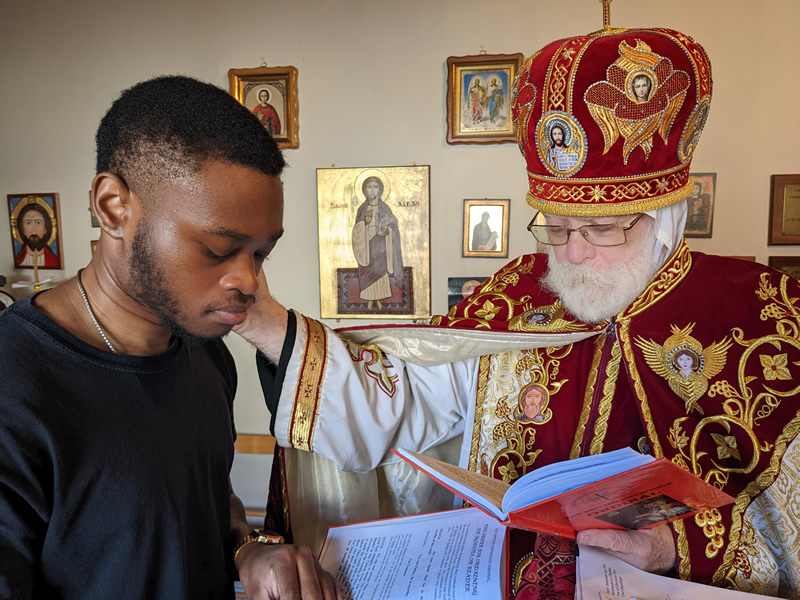
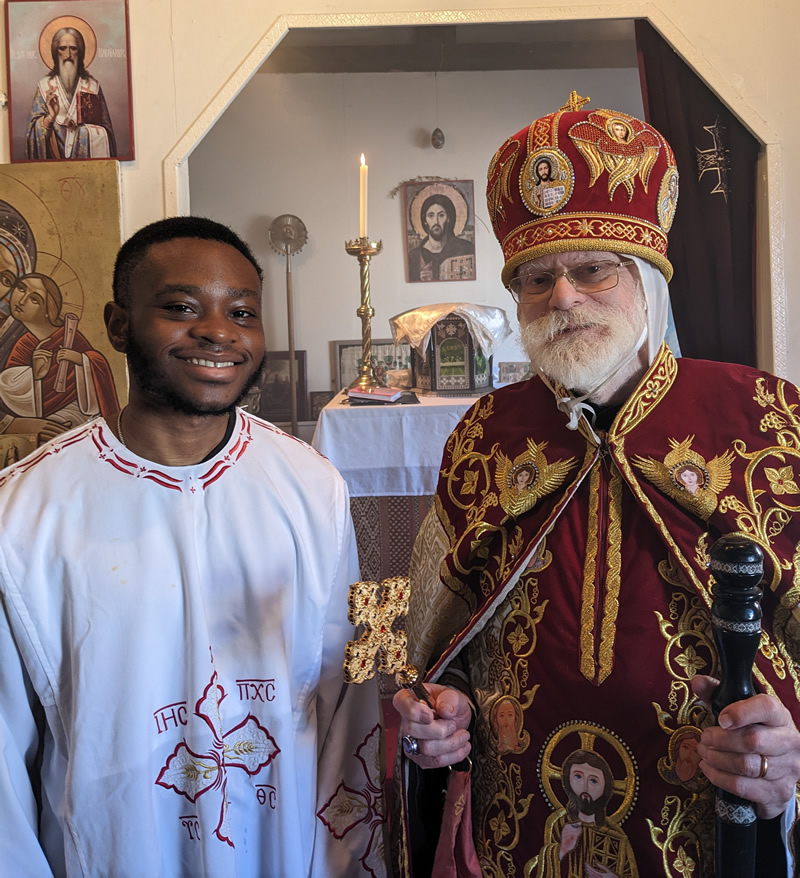
On Sunday, 9 October Abba Seraphim performed the ordination of David Bolatiwa of Gillingham, Kent, as a Reader at St. Alban & Sr. Athanasius Orthodox Church in Chatham. Although he was born at Brent in Greater London he was of Nigerian descent, who had been baptised & chrismated by Abba Seraphim on 13th March 2022, when he replaced his original name of Ayomide with the Christian name of David and has since been a regular worshipper at the Chatham Orthodox Church on the second Sunday in each month and at St. Thomas the Apostle Parish, Charlton on the fourth Sunday in each month.
Romanian Orthodox Ordained as a Reader
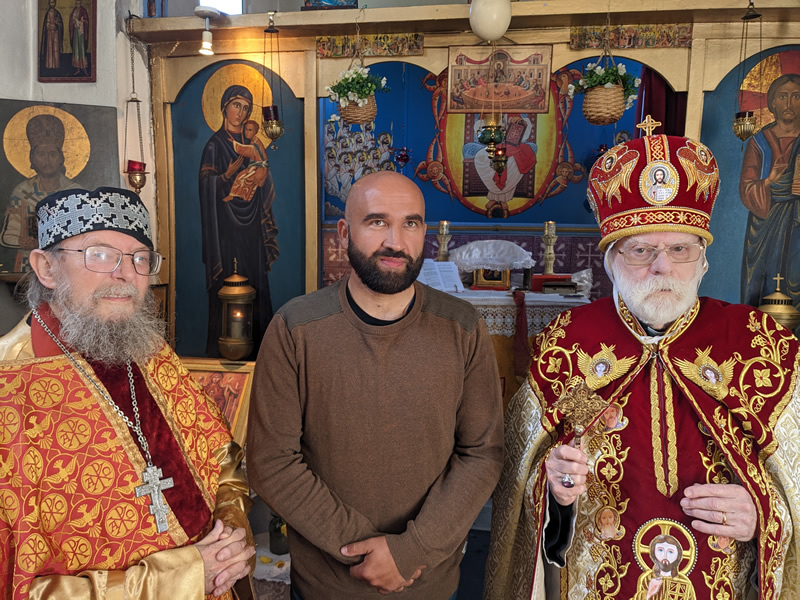
Whilst officiating on Sunday, 18th September at our Bournemouth Church, Abba Seraphim was assisted by his Coadjutor, Abba James, and Father John Ives, the Bournemouth Parish priest, and Abba Seraphim started officiating by ordaining as a Reader, Cristian Craciun, a Romanian who was born in the historical region of Western Moldavia in north-eastern Romania, but now lives in Surrey and often attends our Bournemouth Church.
The service included a panikhida celebrating the life of HM Queen Elizabeth II, With the national anthem as our final Hymn.
THE DEATH OF OUR SOVEREIGN LADY QUEEN ELIZABETH
We are very sad at the news of the recent death of our sovereign Lady Queen Elizabeth II and during all our church services we will maintain her in prayer for her repose in the Lord and encourage all our clergy and laity to recite a panikhida for her.
During the Divine Liturgy we will now change the prayers that we have used in services for our sovereign Lord King Charles III. In the Second Diaconal Litany the prayer should now say:
“For our Most Gracious Sovereign Lord King Charles, and all the Reigning House, with his whole Court and Council, let us pray to the Lord.”
And in “THE COMMEMORATION OF THE LIVING” the prayer should now be:
“Remember O Lord, our Sovereign Lord King CHARLES and all the Reigning House, with his whole, and Council. Remember the forces of the crowd and grant them from heaven and victory; touch their armour, shields arise to their help, and humble before them all their enemies. Set aright their plans, so that we may live a peaceful tranquil life in all piety and dignity.”
Death of Metropolitan Kallistos Ware
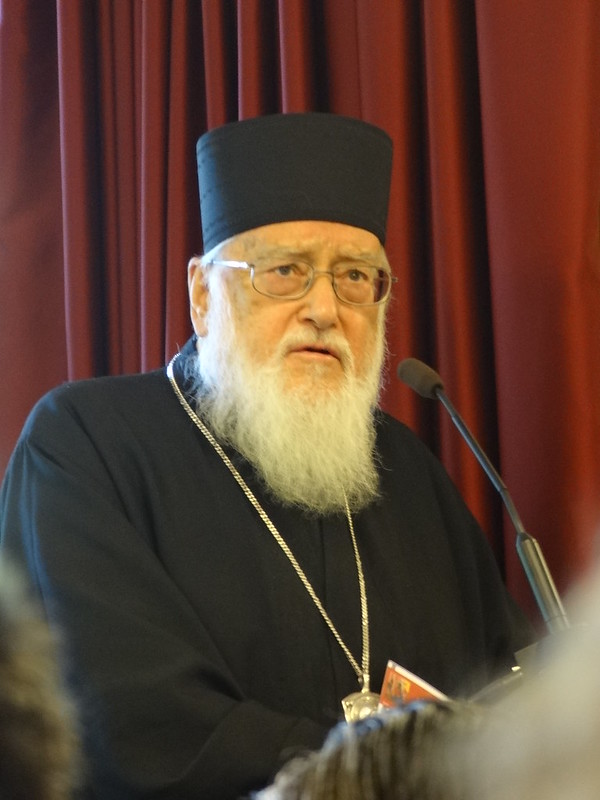
On 24 August 2022 the Greek Orthodox Metropolitan Kallistos Ware died, aged 87 years. He had been born in Bath, Somerset, as Timothy Richard Ware on 11 September 1934. He was educated at Westminster School in London and Magdalen College, Oxford. In 1958 at the age of 24 he became an Orthodox layman and was ordained as a monastic priest and archimandrite in 1966. He also became Spalding lecturer at the University of Oxford in the Eastern Orthodox studies, having also published a book entitled The Orthodox Church in 1963 and The Orthodox Way in 1979. He was consecrated as Bishop of Diokleia in Phrygia of the British Greek Orthodox Archdiocese of Thyateira.
Abba Seraphim became a close friend with him when he was only a deacon and shared with him some of his historical studies on the history of Orthodoxy in Britain, especially Ex Oriente Lux (2008) which was the story of Dr. Joseph J Overbeck (1820-1905) and Father Stephen Hatherly (1827-1905), two converts to Orthodoxy with different conceptions of founding an indigenous Orthodox Church. When he became a Metropolitan he and Abba Seraphim gathered together occasionally and became very friendly.
Following his recent death, Abba Seraphim held a panikhida of prayers for his repose and instructed his British Orthodox faithful and clergy to maintain regular prayers for his repose in Christ.
Memory Eternal!